

Two treatments with entirely different purposes and biological effects
As both skincare and aesthetic medicine continue to evolve, more and more patients are seeking treatments that improve skin quality at a deeper level — without producing an unnatural appearance or requiring extended downtime. HydraPen and Sculptra are two treatments that are frequently discussed together, despite differing significantly in terms of mechanism of action, indications, and results. For clinics aiming to guide patients accurately, understanding these differences is essential. This article examines how HydraPen and Sculptra work, when they should be used, and how they can be combined to achieve optimal aesthetic outcomes.
What is HydraPen?
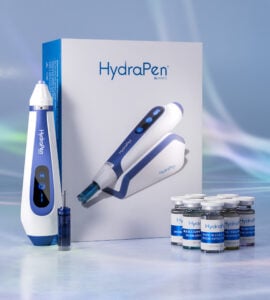
HydraPen is an advanced microneedling device that combines mechanical microchanneling with simultaneous serum infusion. Through sterile needles, small controlled injuries are created in the skin’s surface, activating natural healing processes and stimulating the production of collagen and elastin. What sets HydraPen apart from traditional microneedling tools is its unique serum delivery system. As the needles penetrate the skin, serum is distributed deep into the epidermis, significantly increasing the bioavailability of active ingredients compared to topical application.
HydraPen works primarily in the epidermis and upper dermis, making it ideal for treatments targeting skin texture, superficial lines, pores, and overall quality. The treatment is relatively gentle, requires minimal recovery time, and can be adapted to specific skin conditions through the choice of serum and needle depth.
Microneedling with HydraPen is particularly effective for:
- Acne scars and other scar types
- Enlarged pores
- Uneven skin texture
- Fine lines
- Dry or dull skin
- Reduced cellular renewal
- Uneven tone or lack of radiance
HydraPen’s strength lies in combining mechanical cell stimulation with optimised product delivery.
What is Sculptra?
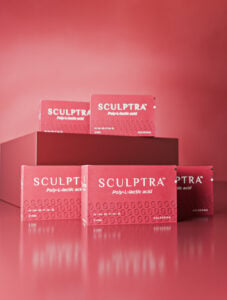
Sculptra is a biostimulatory injectable treatment whose active substance is poly-L-lactic acid (PLLA). Unlike fillers, which provide immediate volume, Sculptra works by stimulating fibroblasts to produce new collagen. The effect is gradual and develops over several months, resulting in a very natural and long-lasting outcome.
Sculptra is typically injected into deeper skin layers across areas where volume has diminished over time: cheeks, temples, chin, and jawline. The treatment restores skin structure from within by increasing dermal density, improving elasticity, and lifting contours without creating a filled or rigid appearance.
Sculptra is primarily used for:
- Volume loss
- Age-related skin laxity
- Reduced firmness
- Contour changes
- Thinning areas with decreased collagen production
Sculptra delivers long-lasting results that often persist for two years or more.
Mechanisms of action – mechanical stimulation vs deep collagen building
HydraPen and Sculptra both stimulate the skin, but in entirely different ways and at different depths.
HydraPen creates a controlled micro-inflammation that initiates the skin’s natural repair processes in the superficial skin layers. The focus is on cell renewal, improved texture, and increased absorption of active ingredients. Results appear relatively quickly thanks to improved circulation and a renewed skin surface.
Sculptra works several skin layers deeper. When PLLA is injected, the particles are gradually absorbed, creating a controlled stimulus for fibroblasts to produce new collagen. This leads to more durable improvements in skin volume and firmness. Results develop more slowly, but are considerably more structural and long-lasting than those achieved with microneedling.
HydraPen improves the skin’s surface. Sculptra improves the skin’s structure.
Indications – Which treatment suits which patient?
One of the most significant differences between these treatments is the skin conditions they target.
HydraPen is best suited to patients with uneven texture, acne scars, enlarged pores, superficial fine lines, dry or dull skin, reduced cellular renewal, or loss of radiance. HydraPen is also a good option for younger patients or those who wish to improve skin quality without altering contours or volume.
Sculptra is best suited to patients with volume loss in the mid-face, marked laxity in the cheeks, temples, or jawline, reduced collagen density, thinning skin, visible signs of ageing, or facial hollowing. Sculptra is particularly popular among patients who want to achieve natural, gradual yet noticeable results without traditional fillers.
Results and longevity
HydraPen delivers visible improvements within a few days. The skin appears clearer and more even, and the serum’s active ingredients contribute to a tangible improvement in moisture, radiance, and elasticity. Results are built over a course of treatments and depend on proper aftercare and repeat sessions.
Sculptra has a delayed effect. It is common for patients to see more significant changes after 6–12 weeks, as collagen begins to build up. The advantage is that results are highly durable — often lasting up to two years or beyond. Sculptra is therefore more of an investment in the skin’s structural quality.
HydraPen delivers faster results; Sculptra provides greater longevity.
Downtime and treatment experience
HydraPen has minimal downtime. Some redness is normal immediately after treatment but typically subsides within a few hours. The skin may feel slightly tight or warm but recovers quickly. Patients can generally return to everyday activities the same day.
Sculptra requires slightly more aftercare. Swelling, mild tenderness, and small nodules may occur directly after injection, and patients are advised to follow the 5-5-5 rule (massage for five minutes, five times per day for five days). Despite this, Sculptra is generally a low-downtime treatment.
Which treatment should the clinic recommend?
The key factor is the type of skin improvement the patient wishes to achieve.
HydraPen is ideal for patients who need to improve the skin’s surface, radiance, and texture — often with rapid results and limited recovery time.
Sculptra is the right choice when the goal is to restore volume, firmness, and contours with results that build gradually and last long-term.
For many patients, a combined approach yields the best results. HydraPen can improve skin quality at the surface, while Sculptra strengthens the underlying structure and delivers lasting firmness.
Frequently Asked Questions
HydraPen is a microneedling device that works mechanically in the skin’s surface layers, combining controlled microchannels with serum infusion to improve texture, pores, and radiance. Sculptra is a biostimulatory injectable based on poly-L-lactic acid (PLLA) that stimulates fibroblasts in the deeper skin layers to produce new collagen, restoring volume and firmness. HydraPen improves the skin’s surface; Sculptra rebuilds its structure.
HydraPen is the more effective choice for acne scars, enlarged pores, and uneven texture. Its microchanneling action stimulates targeted cell renewal in the epidermis and upper dermis, where these concerns originate. Sculptra is not designed for surface irregularities and is unlikely to address them meaningfully.
HydraPen delivers visible improvements within days, and results are cumulative across a course of treatments, typically maintained with repeat sessions every three to five weeks. Sculptra produces longer-lasting effects, with results building over six to twelve weeks and typically persisting for two years or more.
Yes, and many clinics do exactly this. HydraPen can be used to refine skin texture and radiance, while Sculptra is used to restore underlying volume and firmness. The two treatments should be spaced appropriately, with HydraPen typically performed first to optimise skin quality before structural restoration.
HydraPen has minimal downtime — mild redness and warmth that resolve within a few hours, and most patients return to their daily routine the same day. Sculptra involves slightly more aftercare: mild swelling, occasional small nodules, and the recommended 5-5-5 massage routine (massage for five minutes, five times per day, for five days) after injection.