

Two popular treatments for skin improvement with entirely different biological effects
HydraPen and Profhilo are two of the most sought-after treatments in modern aesthetic medicine — and at the same time, two of the most different. Both are effective, both improve skin quality, and both are used by professional clinics to strengthen skin health in the short and long term. But their mechanisms of action, results, treatment areas, and patient profiles differ significantly.
This article provides an in-depth comparison of HydraPen and Profhilo, offering a clear clinical overview of when each treatment is most appropriate and how they can be combined for maximum results.
What is HydraPen?
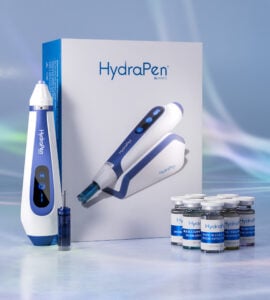
HydraPen is an advanced microneedling device that combines mechanical stimulation with effective serum infusion. Through sterile microneedles, controlled microchannels are created in the skin, initiating a natural repair process. The result is increased collagen production, improved cell renewal, and a softer, more even skin texture.
What sets HydraPen apart from traditional microneedling is its unique serum delivery system. As the needles penetrate the skin, serum is distributed deep into the epidermis, significantly increasing the bioavailability of active ingredients. This makes HydraPen a powerful tool for skin rejuvenation, hydration, and the correction of superficial irregularities.
HydraPen is particularly effective for:
- Rough skin texture
- Fine lines
- Acne scars
- Enlarged pores
- Dry or dull skin
- Reduced cell renewal
- Uneven tone or lack of radiance
The treatment can be tailored to each patient by adjusting needle depth and selecting a serum based on the skin’s individual needs.
What is Profhilo?
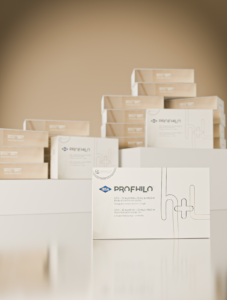
Profhilo is a biostimulatory injectable treatment based on a highly concentrated combination of high- and low-molecular-weight hyaluronic acid. The unique NAHYCO technology stabilises the hyaluronic acid without the use of chemical cross-linking agents, resulting in a gel that spreads evenly through the tissue after injection.
Profhilo does not function as a filler and does not provide direct volume. Instead, it stimulates the skin’s own repair mechanisms by increasing the production of collagen and elastin and improving the skin’s water balance. The result is smoother, firmer, and more elastic skin with noticeably improved radiance.
Profhilo is particularly effective for:
- Dry and dehydrated skin
- Early skin laxity
- Lines caused by moisture deficiency
- Thin skin with reduced elasticity
- Uneven texture
- Age-related loss of elasticity
Profhilo can be used across several areas: face, neck, décolletage, arms, hands, and knees.
Mechanisms of action – mechanical cell stimulation vs bioactive hydration
HydraPen and Profhilo are both biostimulatory treatments, but their mechanisms of action differ drastically.
HydraPen works in the skin’s outermost layers by creating microchannels. These controlled injuries activate the skin’s healing processes and stimulate collagen production. Simultaneously, the infused serum helps to hydrate, repair, and improve skin function. Results appear relatively quickly and improve across multiple treatments.
Profhilo is injected superficially and spreads through the skin where it deeply hydrates, improves the skin’s viscoelasticity, stimulates the production of collagen types I, III, and IV as well as elastin, and strengthens skin structure over time. Profhilo therefore functions both as a deep moisturiser and as a tissue-strengthening treatment that improves skin quality over the longer term.
In short: HydraPen improves the skin’s surface; Profhilo improves the skin’s structure and elasticity.
Indications – When is HydraPen the best choice?
HydraPen is ideal for patients who wish to improve the skin’s surface and texture. It is best suited to patients with enlarged pores, uneven texture, acne scars, fine lines, dry or dull skin, reduced cell renewal, or a need for improved serum absorption. HydraPen is frequently recommended as a course of treatments, where results are built up gradually over multiple sessions.
Indications – When is Profhilo the best choice?
Profhilo is the right choice for patients who want to improve skin elasticity, hydration, and firmness without altering the volume or shape of the face. It is particularly suitable for patients with early skin laxity, crepey skin, moisture-deficient skin, fine lines caused by dehydration, an overall decline in skin quality, or thinning areas such as the neck or décolletage. Profhilo produces noticeably plumper and more elastic skin after just one to two treatments.
Results and longevity
HydraPen delivers visible improvements within a few days. The skin achieves more radiance, a more even texture, and improved softness. Results are reinforced with repeated treatments, typically at intervals of three to five weeks.
Profhilo produces its first results after approximately two weeks, with full effect achieved after two treatments. Results last for six months, and many patients choose to maintain with two treatments per year. Improvements are typically seen as increased elasticity, deep hydration, improved skin structure, and reduced fine lines.
HydraPen delivers faster changes to the skin’s surface, while Profhilo provides more lasting improvement to the skin’s deeper dynamics.
Downtime and treatment experience
HydraPen has minimal downtime with slight redness and rapid recovery. It is suitable for patients who need an effective treatment with minimal impact on their daily routine. Profhilo has almost no downtime, with only small injection blebs that disappear within a few hours. Both treatments are ideal for patients wishing to avoid extended recovery periods.
Which treatment should the clinic recommend?
HydraPen is best suited when the patient wishes to improve skin texture, pores, scars, superficial fine lines, or radiance and moisture in the epidermis.
Profhilo is best suited when the patient wishes to improve elasticity, firmness, deep hydration, overall skin quality, or signs of ageing without volume enhancement.
Many clinics combine HydraPen and Profhilo within treatment plans — for example, HydraPen for the skin’s surface and Profhilo for deeper quality improvements.