

Two advanced injection treatments with completely different biological effects
In modern aesthetic medicine, there is a growing interest in treatments that not only fill in or mask signs of aging, but instead stimulate the skin’s own repair and rejuvenation processes. Two of the most popular options on the market are Sculptra and Profhilo. Although both injection treatments improve the quality and texture of the skin, they do so through completely different mechanisms – making the choice of treatment crucial to achieving optimal results. In this in-depth article, we compare Sculptra and Profhilo based on their mechanism of action, indications, results and patient profiles.
What is Sculptra?
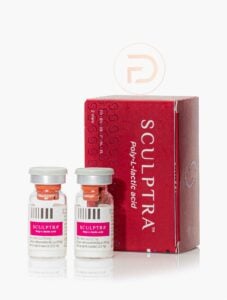
Sculptra is a collagen-stimulating injection treatment based on poly-L-lactic acid (PLLA). Unlike traditional fillers, Sculptra does not directly add volume at the time of injection. Instead, it stimulates the body’s own fibroblasts to build new collagen – a process that takes place gradually over several months.
PLLA has been used in medicine for over 30 years, including in surgical sutures. In aesthetic treatments, its role is to restore the structure of the skin by increasing density, firmness and volume in a natural way. Sculptra is usually injected over larger areas such as the cheeks, temples, chin and jawline, where the underlying structure of the skin has weakened over the years.
The results are gradual and discreet. The slow collagen build-up allows the skin to have improved firmness and volume without looking plumped or over-corrected. The effect often lasts for two years or longer and can be built up over a series of 2-4 treatments depending on the initial condition and skin quality.
Sculptra is therefore an excellent choice for volume loss, sagging skin, contour changes and obvious signs of aging where the structure of the skin needs to be strengthened.
What is Profhilo?
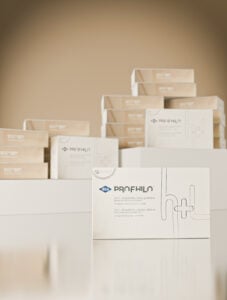
Profhilo is a biostimulatory injection treatment based on a unique combination of high and low molecular weight hyaluronic acid (HA) in a stabilized gel. With NAHYCO technology, the hyaluronic acid chains are bound together without the use of chemical cross-links, creating a product with one of the highest HA concentrations on the market.
Unlike fillers, Profhilo does not provide direct volume or contour change. Instead, it works on the quality of the skin by deeply moisturizing, improving elasticity and stimulating the production of four different types of collagen and elastin. Profhilo spreads evenly into the tissue after injection and therefore treats the entire skin area in a harmonious way.
Profhilo is suitable for areas such as the face, neck, décolletage, arms, knees and hands – areas where the skin has become thin, dehydrated or lost its elasticity. The results are visible after just a few weeks, leaving the skin with a more radiant, resilient and hydrated texture.
Mechanisms-of-action – slow collagen building vs. intensive hydration
Sculptra and Profhilo are both biostimulatory treatments, but the effect occurs at completely different levels.
Sculptra works deep in the dermis by activating fibroblasts to produce new collagen. This leads to improved skin thickness, increased firmness and restored volume in areas where the skin has lost structure and support. The process is slow but very sustainable.
Profhilo works in the more superficial layers of the skin where hyaluronic acid binds moisture and improves skin elasticity. The unique combination of HA molecules also stimulates elastin and collagen, leading to improved skin quality, smoother surface and less visible lines. The effect comes faster but is more focused on elasticity and moisture levels than volume.
In short: Sculptra builds structure; Profhilo builds quality.
What indications are best for Sculptra?
Sculptra is optimal for patients who have:
- loss of volume in cheeks, temples or jawline
- sagging skin or decreased dermal density
- marked nasolabial folds or marionette lines
- need for facial contouring without fillers
- skin that has lost firmness after weight loss or aging
Sculptra is particularly effective for patients in the 35-60 age group where age-related volume loss has become more apparent.
What indications are best for Profhilo?
Profhilo is suitable for patients who have:
- dehydrated or dehydrated skin
- fine lines caused by lack of moisture
- reduced elasticity of the face, neck or décolletage
- uneven skin texture
- incipient skin laxity
- thin skin that needs strengthening without volume
Profhilo is generally a better choice for patients seeking an improvement in skin quality rather than volume.
Results and durability
Sculptra gives slower but longer-lasting results. Most patients see clear changes within 8-12 weeks and improvements continue over the following months. The effect usually lasts up to 24 months or longer.
Profhilo provides a faster visual improvement and the skin feels more plump, hydrated and elastic within a couple of weeks. Results last for around 6 months and many patients opt for 1-2 maintenance treatments per year.
So the big difference is that Sculptra changes the structure of the skin; Profhilo improves the quality of the skin.
Downtime and patient comfort
Both Sculptra and Profhilo have minimal downtime.
Sculptra often causes slight swelling and small lumps immediately after injection, but these are massaged away according to the 5-5-5 rule (five minutes, five times a day for five days).
Profhilo gives small injection blebs at ten standard points, which disappear within a few hours.
Profhilo is generally more gentle, while Sculptra requires more aftercare and patience.
What treatment should the clinic recommend?
The choice between Sculptra and Profhilo depends entirely on the patient’s goals.
A patient who wants to restore firmness and structure to the skin will get the best results with Sculptra.
A patient who wants to improve skin radiance, hydration and elasticity without volume change should choose Profhilo.
In many cases, these treatments can be combined over time – Profhilo pre-event and seasonally for skin quality, and Sculptra in course form for long-term volume and firmness.
Frequently Asked Questions
Sculptra and Profhilo are both biostimulatory injectables, but they target entirely different concerns and work at different depths. Sculptra is based on poly-L-lactic acid (PLLA) and is injected into the deeper skin layers to restore lost volume, rebuild contours, and stimulate dense new collagen formation. Profhilo is based on stabilised hyaluronic acid (NAHYCO technology) and works in the more superficial dermal layers to improve hydration, elasticity, and overall skin quality without adding volume. Sculptra rebuilds structure; Profhilo refines skin quality.
Sculptra is recommended for patients with visible volume loss in the mid-face, hollowing of the cheeks or temples, reduced jawline definition, or age-related laxity that affects facial contours. Profhilo is the more appropriate choice for patients with thin, dry, or crepey skin, early elasticity loss, or skin-quality concerns where contour restoration is not the priority. The decision should be based on whether the patient’s primary need is structural reinforcement or skin-quality improvement.
Sculptra typically delivers results lasting two years or longer because PLLA stimulates durable collagen formation that continues to support facial structure long after the product itself has been absorbed. Profhilo produces results lasting approximately six months, after which most patients return for maintenance — typically two treatment sessions per year. Sculptra is therefore positioned as a longer-term structural investment, while Profhilo functions as a recurring quality-improvement treatment.
Yes. The two products are complementary and address different layers and concerns. A common sequenced protocol is to use Sculptra first to rebuild volume and structural support in the cheeks, temples, or jawline, then introduce Profhilo to refine skin quality, hydration, and elasticity across the treated area. The combination produces both improved facial architecture and enhanced skin texture.
Sculptra is injected into the deeper dermis and subcutaneous layers. Mild swelling, tenderness, and small nodules can occur immediately after the session, and the standard 5-5-5 aftercare routine (massage for five minutes, five times per day, for five days) is recommended to ensure even product distribution. Profhilo is delivered through five small injection points on each side of the face using the Bio Aesthetic Points (BAP) technique. Visible blebs disappear within a few hours, and there is essentially no downtime. Sculptra develops gradually over six to twelve weeks; Profhilo shows results within two to four weeks of the second session.