

– two powerful skin renewal treatments with completely different mechanisms of action
As fall approaches and the sun’s UV radiation decreases, the opportunity to work more actively with advanced skin-improving treatments opens up. Among the most popular are two categories that are often compared: microneedling with ReMed HydraPen and chemical peels with BioRePeelCl³ FND. Although both aim to improve skin quality and texture, they work at completely different biological levels. In this in-depth analysis, we look at the differences, benefits and clinical indications to help both practitioners and clinicians choose the right treatment for the right patient.
What is HydraPen?
HydraPen is an advanced microneedling tool that combines mechanical stimulation with simultaneous serum infusion. Through sterile microneedles, thousands of controlled microchannels are created in the skin, activating the body’s natural healing process and stimulating the production of collagen and elastin. What sets HydraPen apart from traditional microneedling tools is the ability to infuse serum directly into the skin during the treatment itself. For the patient, this means a more effective treatment and a significantly improved absorption rate of active ingredients compared to manual application to the skin surface.
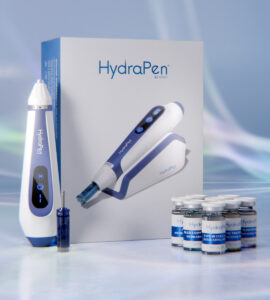
HydraPen works primarily in the epidermis and upper dermis, making the treatments gentle, yet highly effective. The result is skin with improved texture, reduced pores, more even skin tone and increased elasticity. In addition, recovery time is minimal, making HydraPen an attractive option for patients who want to see results quickly with as little downtime as possible.
What is BioRePeelCl³ FND?
BioRePeelCl³ FND is a biphasic TCA peel with 35% trichloroacetic acid that combines hydrophilic and lipophilic actives to exfoliate, stimulate and revitalize the skin without classic peeling. This means that the patient gets the power of a TCA peel but without the prolonged recovery periods traditionally associated with higher acid concentrations. BioRePeel works at both the epidermal and dermal level thanks to its two-phase formulation, where the hydrophilic phase exfoliates while the lipophilic phase protects the skin barrier and reduces irritation.
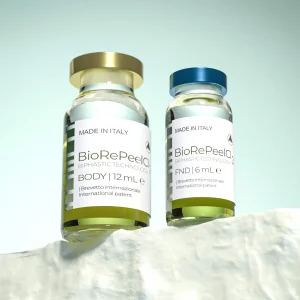
The formulation contains several acids – including salicylic, tartaric and lactobionic – as well as amino acids, vitamins and GABA. The combination makes the peel unique by providing both exfoliation and biostimulation. The result is skin with improved radiance, more even skin tone and significantly reduced pores.
HydraPen vs BioRePeel – differences in mechanisms of action
While the end result may be similar – smoother, clearer, more uniform skin – HydraPen and BioRePeel work in completely different ways.
HydraPen is based on a mechanical stimulation of the skin matrix. The microchannels created trigger the activity of fibroblasts and increase the production of collagen and elastin. This type of stimulation is particularly effective for textural problems such as scars, fine lines, enlarged pores and uneven skin texture.
BioRePeel, on the other hand, is a chemically acting peel. Here the main focus is exfoliation, cell renewal and pigment smoothing. The biostimulatory effect of the TCA peel complements exfoliation by activating the skin’s natural regeneration process, but without adding any mechanical action.
HydraPen is perfect for skin texture; BioRePeel is superior in skin tone improvement.
What skin conditions are best suited for HydraPen?
HydraPen is particularly effective for:
– acne scars and other scar types
– enlarged pores
– uneven skin texture
– fine lines
– dryness or reduced elasticity
– need for increased serum absorption
HydraPen is also a good choice for patients who want a progressive treatment that builds up the quality of the skin over time, but with results visible already after the first sessions.
What skin conditions are best suited for BioRePeel?
BioRePeelCl³ FND is well suited for:
– pigmentation after sun damage
– uneven skin tone
– dull, lifeless skin
– fine lines
– pore reduction
– pre-event glow treatment
Unlike many traditional peels, BioRePeel can be used all year round, even during the summer months, thanks to the fact that it does not cause photosensitivity.
Downtime and patient comfort
HydraPen provides a very short recovery time. Redness afterwards is common but subsides quickly, often within a few hours. In many cases, patients can return to their daily lives immediately.
BioRePeel also has minimal downtime. Skin may feel tight and somewhat dull the next day, but this is transient. No visible skin flaking or peeling occurs, which is a great benefit for patients who cannot spare time from social or professional activities.
What treatment should the clinic recommend?
The choice between HydraPen and BioRePeel is determined by the needs of the skin.
For texture, scars and collagen stimulation: choose HydraPen.
For skin tone, radiance and pigment: choose BioRePeel.
In many cases, combination treatments are even more effective. A common strategy is to start with BioRePeel to improve the skin’s surface and then use HydraPen in a regimen to strengthen the skin barrier, infuse active serums and stimulate collagen synthesis.
Conclusion
HydraPen and BioRePeel are two of the most powerful treatments in modern skin renewal, but they work in completely different ways. HydraPen is the first choice for patients who want to focus on texture and collagen stimulation, while BioRePeel offers a fast and effective improvement in skin tone, radiance and pore structure. Both provide strong results and can be combined to advantage.