
Which serum gives the best results, and for which skin type?
When a patient undergoes microneedling with HydraPen, there is one factor that affects the outcome more than any other: the choice of serum. Because HydraPen creates microchannels in the epidermis and upper dermis, active ingredients can penetrate much deeper than with traditional skincare. This means that the composition of the serum is crucial to the effectiveness of the treatment. ReMed offers three specifically developed serums optimized for HydraPen: Hyaluronic Acid Serum, Amber+ Serum and PDRN Serum. Although all three improve skin quality, they work by completely different biological mechanisms, target different skin conditions and produce different results.
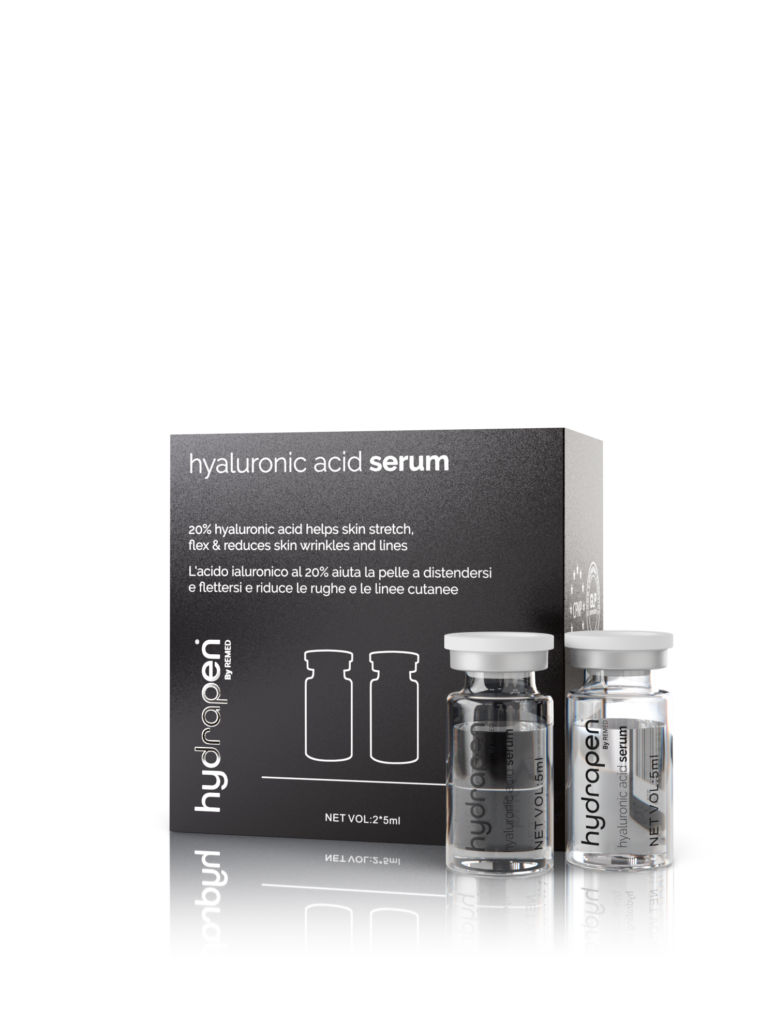
Hyaluronic Acid Serum: Deep Hydration and a Strengthened Skin Barrier
Hyaluronic Acid Serum is the most moisturizing of the three and an obvious choice for dryness, tightness or reduced elasticity. The formula is based on hyaluronic acid, which binds up to 1,000 times its own weight in water, making it one of the most effective ingredients for increasing skin moisture levels.
What makes the HydraPen version particularly effective is that the serum infusion takes place at the same time as the microneedles penetrate the skin. This allows the hyaluronic acid to exert its effect in the deeper layers of the skin, providing an immediate plumping effect while strengthening the skin barrier. Vitamin E in the formula acts as an antioxidant, protecting cells from free radicals, while allantoin soothes irritation and stimulates regeneration.
The serum is suitable for patients with dehydrated or dehydrated skin, skin affected by sun, heat or climate change, and skin that lacks plumpness or softness. It is also an ideal first serum for patients who are new to microneedling or who want to boost recovery from summer sun damage.
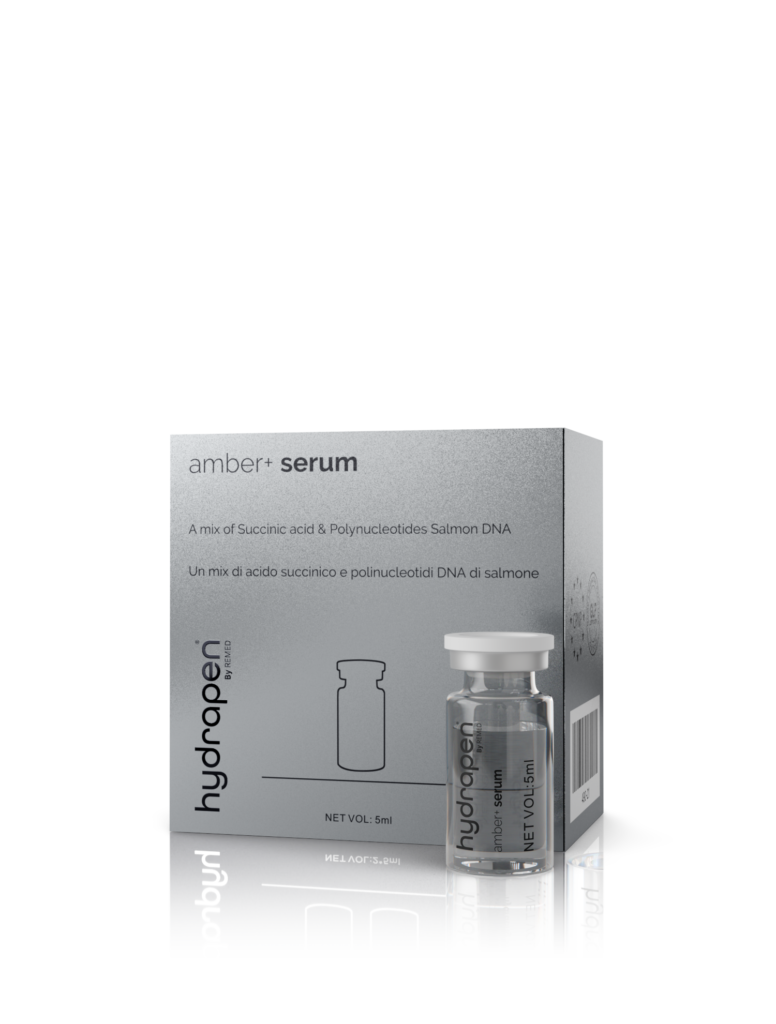
Amber+ Serum: Luster, Vitality, and Improved Elasticity
Amber+ Serum is designed to give the skin a clearer vitality and more energy. The formula contains amber extract, which is known to support cellular energy production and promote cell renewal. This is combined with hyaluronic acid and panthenol to moisturize, soften and improve skin resilience.
Amber+ Serum is particularly effective for tired and dull skin. The active components of the amber extract improve microcirculation, giving the skin a more even tone and radiance. The serum also enhances skin elasticity, making it suitable for patients experiencing early signs of skin aging such as fine lines, slight loss of firmness or uneven tone.
Compared to Hyaluronic Acid Serum, Amber+ is more focused on glow, energy and renewal. It’s common for clinicians to choose this serum when the patient has a combination of dull skin tone, decreased circulation, or fatigue lines – or when looking to give skin an immediate visible improvement.
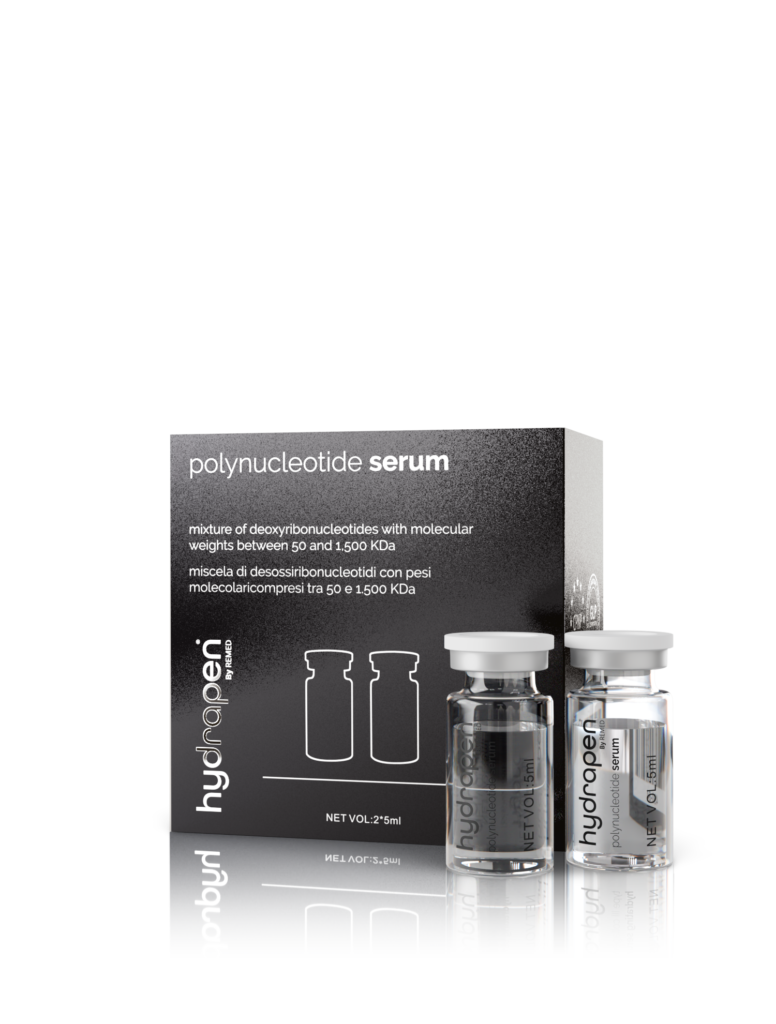
PDRN Serum: Intensive Tissue Repair and Regeneration
PDRN Serum is the most regenerative option and is based on polydeoxyribonucleotide (PDRN), a biotechnologically produced ingredient that is well studied in medical skin healing. PDRN acts at the cellular level by stimulating fibroblasts, increasing cell renewal and strengthening skin repair processes. Combined with Centella Asiatica and Hyaluronic Acid, the serum becomes a powerful tool to restore and repair skin that is damaged, stressed or inflamed.
PDRN Serum is often used after microneedling, laser, peels or other procedures that create controlled damage to the skin. The serum helps to reduce inflammation, accelerate healing and strengthen tissue. It is also suitable for patients with scars, sensitive skin, rosacea-prone skin or signs of chronic skin stress.
Compared to the other two serums, PDRN is the most targeted for healing, texture improvement and deep tissue stimulation. It is the obvious choice for patients who need more than just moisture and radiance – those who need deep skin quality improvement.
Which Serum Should the Clinic Choose?
The choice is determined by the needs of the skin. A patient with dryness, lines or reduced softness will respond best to Hyaluronic Acid Serum. A patient with dull skin, lack of radiance or mild skin fatigue will get better results with Amber+ Serum. And patients in need of regeneration, healing or texture improvement will respond best to PDRN Serum.
The serum can also be combined across multiple treatments. Many clinics start with PDRN to restore skin function and follow up with Amber+ to add radiance and vitality. Hyaluronic Acid Serum is often the first choice for events, dry climates or to support the skin barrier.
HydraPen + Serum: An Effective Combination for Skin Improvement
Whatever serum is chosen, it is the combination with HydraPen that creates the most powerful results. Microneedling increases skin receptivity and improves absorption of active ingredients, while the serum optimizes recovery and long-term skin improvement.
A correctly chosen serum type can amplify the effect of microneedling with up to 80% higher uptake according to tests, making the choice crucial for the result. The ReMed range makes it easy to tailor each treatment to the specific needs of the patient.
Frequently Asked Questions
The three serums target different layers and biological mechanisms within the skin. Hyaluronic Acid Serum delivers deep hydration and supports the skin’s moisture barrier, making it the foundation serum for dehydrated, dull, or compromised skin. Amber+ Serum combines succinic acid (from natural amber) with polynucleotides to soothe, calm, and reinforce sensitive or irritated skin while supporting tissue repair. The PDRN (Polynucleotides) Serum is a regenerative formulation that activates fibroblasts, stimulates collagen synthesis, and accelerates cellular renewal — making it the most potent option for ageing, damaged, or post-procedure skin. All three are designed to be delivered through HydraPen microneedling for maximum bioavailability.
The PDRN (Polynucleotides) Serum is the most appropriate choice for ageing skin. Polynucleotides are short DNA fragments that activate fibroblasts and stimulate the production of new collagen and elastin, supporting visible improvement in firmness, texture, and overall skin quality. Many clinics combine PDRN with Hyaluronic Acid Serum within the same course to add a hydration boost alongside the regenerative effect.
The Amber+ Serum is the most appropriate choice for sensitive, reactive, or post-procedure skin. Its succinic acid and polynucleotide profile delivers anti-inflammatory and antioxidant action that calms redness, supports the skin barrier, and accelerates recovery. The serum is therefore suitable both as a stand-alone treatment for chronic sensitivity and as part of recovery protocols after more intensive procedures such as deeper peels or laser treatment.
Yes. The three serums are designed to be combined based on the patient’s skin diagnosis. A common combined protocol uses PDRN first to activate regeneration in the deeper layers, follows with Hyaluronic Acid to plump and hydrate, and finishes with Amber+ to calm the treated skin and reinforce the barrier. The specific combination, order, and needle depth should always be tailored to the individual patient’s condition and goals.
The typical protocol is a course of four to six treatments spaced three to four weeks apart, followed by maintenance sessions every two to three months. The interval can be adjusted depending on the serum and skin condition: regenerative PDRN protocols often warrant longer spacing to allow the collagen synthesis cycle to complete, while Hyaluronic Acid hydration sessions can be repeated more frequently when seasonal or environmental factors compromise skin moisture levels.